

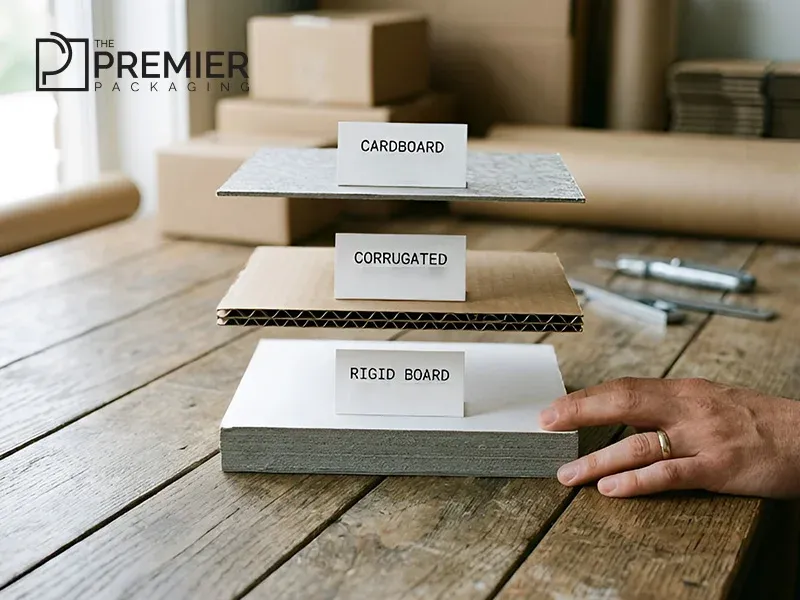
Anyone who has ever placed an order for packaging has surely heard the three terms: cardboard, corrugated, and rigid board. They are often misinterpreted as being synonymous. However, they don’t really. They all vary, and choosing the right one can really make or break your packaging. The only difference between them in simple terms and simple explanations.
The reason that this is relevant to your brand.
It is an expensive error to make to select the wrong material. If it is too light, your items will be damaged upon arrival. Choose a too-heavy item, and you’re wasting on shipping costs and materials.
The right choice will not harm your product, won’t cost more than necessary, and will harmonise with your brand image. Therefore, it’s always better to get a clear idea of what they are getting before ordering. Let’s take a closer look at each of them.
What Is Cardboard?
Any thick paper material is called ‘cardboard’. In the packaging industry, however, it almost always refers to paperboard, a single, thick layer of pressed paper fibres.
Prints smoothly and is lightweight. It’s everywhere, such as:
- Boxes for cereals and food products.
- Boxes for cosmetics and beauty products.
- Tissue and medicine boxes.
Cardboard is great for lightweight products. Folds easily, is easy to colour and prints beautifully. However, it’s not too strong when used on its own. Will not protect heavy items or fragile items during rough shipping.
Ideal for: light retail products, which stay in the shelves and don’t go far.
What is Corrugated board?
The hard one is corrugated board. It’s what most people imagine a “shipping box” would look like. Its ingenious design is the key to its success.
Corrugated board consists of 3 parts:
- A flat outer surface.
- The middle layer is wavy and rippled (fluted).
- A bottom layer that is level.
This wavy mid-body is the key! It generates air pockets to cushion the blow, adds power and protects products. This is why corrugated is the king of shipping boxes and boxes in e-commerce.
There are various thicknesses (flute grades). Others are thin and neat, suitable for use in product boxes. Others include thick and robust for heavy goods. Corrugated Board is available in:
- boxes for shipping and mailing.
- Large product boxes.
- Heavy or fragile boxes.
Ideal for: Transit Protection, Online Orders, and anything that requires strength.
What is Rigid Board?
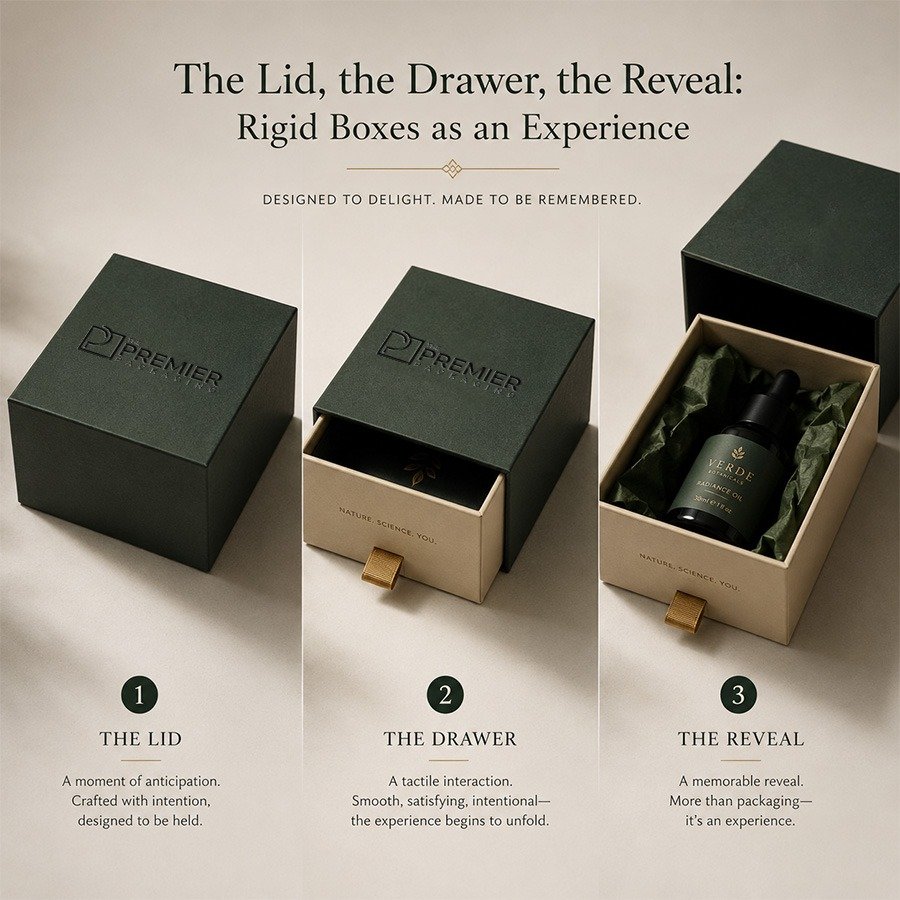
The luxury choice is rigid board. It is the sturdier, heavier, high-quality fabric employed on higher-quality boxes. Imagine the box an expensive phone, watch, or perfume comes in.
Rigid board is thicker, coarser and harder than normal cardboard. Does not fold flat. Instead, it is simply made into a hard, solid form and covered with printed paper. This makes it feel heavy and bulky.
Rigid board can be found in:
- Luxury gift boxes.
- Jewellery & watch cases.
- Packaging for high tech and cosmetics.
Rigid board is a special feel. That weight-and-strength signal is a preview of the box’s quality, even before it’s opened! It’s the preferred option for brands looking for a premium vibe.
Ideal for: luxury goods where appearance and tactile qualities are paramount.
Get a quick comparison at a glance.
Here is a way to remember the three for you:
Light and smooth, ideal for printing, these are made of cardboard (paperboard). Ideal for smaller retail products.
Corrugated: strong, shock-absorbing, with a wavy middle. Best for shipping.
Rigid board; thick, heavy and higher quality. Ideal for gifts for luxury.
Each has its place. It’s all about getting the correct material to the right job.
Step-by-step instructions on selecting the appropriate one.
So which one is it? It’s just a couple of questions. Ask yourself:
- How much does my product weigh? For more weighty materials, use corrugated strength.
- Will it go a long distance? To protect corrugated, a long journey is required.
- Is it a good quality product? Luxury items look great in hardboard.
- Does it simply lie on a shelf? Lightweight cardboard works well.
- How much money do I have to spend? Cardboard is the least expensive, rigid is the most expensive.
Follow these, and the correct option will most likely be apparent. If you need any advice, a good packaging supplier can help you navigate to the right one.
What is wrong with mixing materials?
Yes, and many smart brands do. Materials can be used in combination to achieve the optimum of both.
For instance, a brand can have a beautifully printed cardboard sleeve that is placed over a strong corrugated sleeve. Or a hard box with a protective corrugated mailer to ship. By combining materials, you can find a combination of look, strength and cost.
There, excellent design comes into its own. The right mix safeguards your product AND impresses your customer!
The Eco Angle
There’s a bright side for green brands. The three materials can be environmentally friendly when used properly.
These features include:
- Materials which can be recycled by consumers and dropped off in the bin.
- Recycled content is a composite of used paper and card.
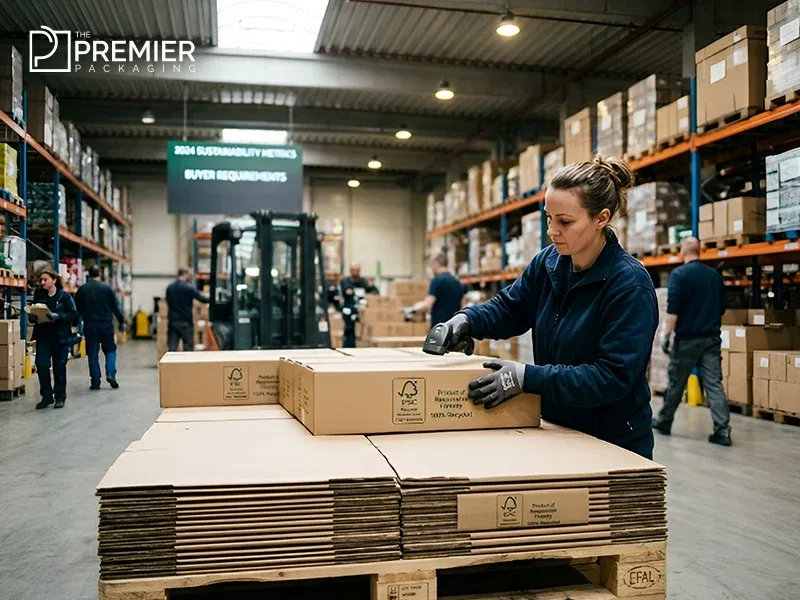
- FSC-certified stock from forests that are managed responsibly.
Paper is one of the simplest materials to recycle at home. Opting for recyclable, certified choices isn’t just better for the environment; it’s also more meaningful to customers who care about the planet. It is a good, future-proof investment for any contemporary brand.
Final Thoughts
You just now understand the true distinction. Cardboard is lightweight and ideal for print and shelf appeal. Corrugated is strong, with that nifty wavy middle that keeps products safe during shipping. Rigid board is thick, heavy and designed to deliver high-quality luxury products.
No one is saying there’s one “best” material. The best one is the right fit for your product, your journey, and your budget. There are different answers to the questions of a light cosmetic box, a heavy shipped order and a luxury gift.
If the material is right, the rest is easy. Your product remains safe and secure, your costs remain manageable, and your brand remains exactly as it should be. The next time you place an order for packaging, you will understand exactly what you are requesting and why it is important.
Share on: